

Local Ecotype
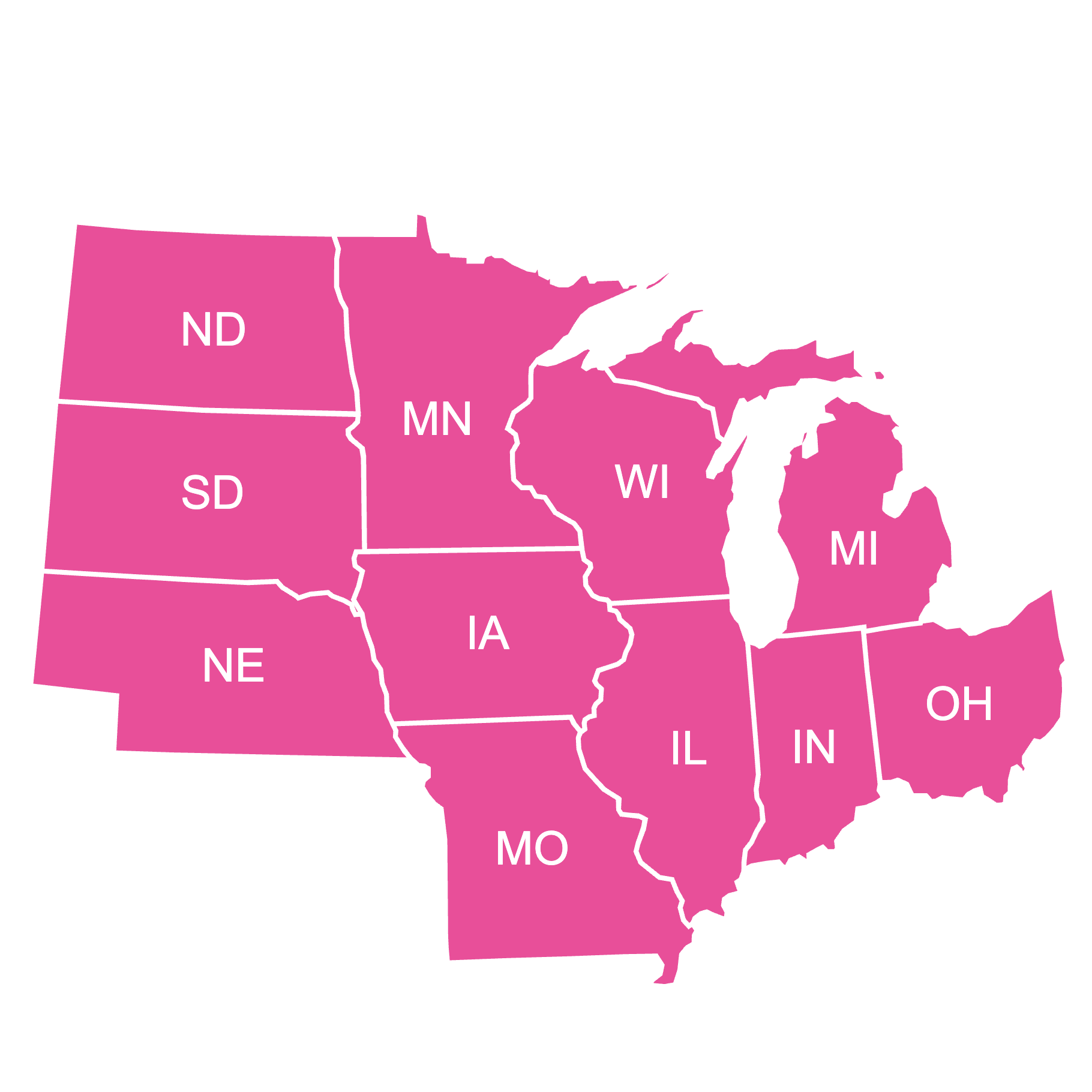
Shooting Star Native Seeds supplies local ecotypes and native seeds from throughout the Midwest.
We believe it’s important to use local ecotype seed that is adapted to regional climate and soil conditions. In addition to growing and harvesting seed from our own production fields, we work closely with growers and collectors from throughout the Midwest to source the best possible seed for each project.
Source-Identified
The Source-Identified Native Seed Program is designed to assure that the proper identity of native grasses and wildflowers is maintained through all phases of seed production. Seed which is certified through this program is marked with a yellow tag. The location where the material was originally collected from native stands (genetic origin) is indicated on the certification label. Source-identified materials are comprised of the least selected germplasm and are considered to be genetically diverse.
Certified seed is often required by government agencies for highway roadside re-vegetation and other projects to ensure that the planting materials are adapted to appropriate climatic conditions.
The certification process consists of several steps through which a state’s crop improvement agency verifies that seed and plant production meets the agencies’ standards. Steps include seed source verification, inspection of seed production sites and seed testing.
Shooting Star Native Seeds is a member of the Minnesota Crop Improvement Agency and certifies the majority of the species produced through the source-identified program.

PLS (Pure Live Seed)
Purity is the percentage of actual seed by weight. The rest of the material in a seed lot may be made up of inert material, weed seed, or other crop seed. Total Viable is the percentage of seed that will germinate. This can be determined by adding the germination percentage plus the dormancy percentage or from a tetrazolium (TZ) test. By multiplying these two factors together, you can determine the percentage of material that is pure live seed versus the percentage of material that is essentially worthless. To determine the bulk lb of seed that are needed, divide the PLS lb required by the PLS percentage.
Example #1
A Switchgrass seed lot has a germination of 92.00%, hard seed of 5.00%, and a purity of 98.00%. The PLS % for the seed lot is 95.06% ((0.92 + 0.05) x 0.98). If the Switchgrass seeding rate is 3.00 PLS lb per acre, 3.16 bulk lb should be planted per acre (3.00 ÷ .9506).
Example #2
A Butterfly Milkweed seed lot has a TZ of 85.00% and a purity of 95.00%. The PLS % for the seed is 80.75% (0.85 x 0.95). If the seeding rate is 0.12 PLS lb per acre, 0.15 bulk lb should be planted per acre (0.12 ÷ .8075).
ADDITIONAL NOTES:
State seed law requires that all native grass and wildflower seed distributed must include a seed analysis tag for every species. The tag should include the following:

Germination and Hard Seed Percentages
-
Lot Number
-
Species Name
-
Test Date
-
Origin
-
Variety
-
Purity, Inert Matter, Other Crop, and Weed Seed Percentages